Send the ad up to 8 days after payment
A link will be sent to you by contact@via-agency.media
Reserved space Announcement transmitted
If you want another location, you can move this ad
Reference
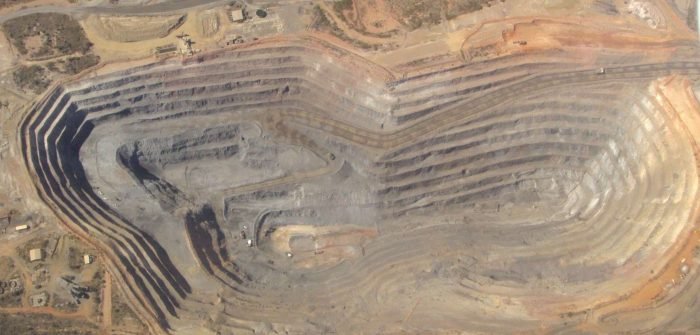
Congo – Mines – The development of the mining industry
Given the considerable development potential in relation to local subsoil resources, the mining industry could play a decisive role in achieving emergence objectives.
Send the ad up to 8 days after payment
A link will be sent to you by contact@via-agency.media
Reserved space Announcement transmitted
If you want another location, you can move this ad
Reference
Boosting the use of public-private partnerships (PPPs) should help diversify the Congolese economy, which has remained dependent on oil revenues for too long. In particular, it could accelerate the development of the country's mineral potential. The Congolese subsoil holds several billion tons of iron ore reserves, including 517 million tons in the mega-deposit of Mount Nabemba alone, as well as significant copper deposits. Exploiting these deposits requires substantial investments, which are now made possible by the new PPP law of December 30, 2022.
The Congolese Mining Code, finalized in 2005, establishes an attractive regulatory framework for companies wishing to conduct mining operations in the country. The Code offers four types of mining permits: prospecting authorization; exploration permit; industrial mining authorization; and mining permit. The Congolese government thus provides both the necessary infrastructure and an attractive regulatory framework for regional and international investors.
For example, the Sintoukola potash deposit has the potential to transform the Congo's mining sector by contributing to the diversification of the Congolese economy. The Sintoukola district is a globally important potash basin in the Republic of Congo, with very high-grade, shallow deposits located near the coast. According to a 2019 feasibility study, the project could generate annual revenues of $773 million. Backed by the Omani government and the Chilean company SQM, the British company Kore Potash Plc, focused on developing Congolese phosphates and its Kola mine, signed a contract in June 2022 with its new partner, the Chinese construction company Sepco, a subsidiary of PowerChina, for the construction of Kola.
Send the ad up to 8 days after payment
A link will be sent to you by contact@via-agency.media
Reserved space Announcement transmitted
If you want another location, you can move this ad
Reference
The first polymetallic plant was inaugurated in 2019 in the Bouenza region of southern Portugal. Funded by Chinese capital, it produces 20,000 tons of copper annually, primarily for export. In the near future, the plant will also produce zinc and lead.
Two agreements for the exploitation of the Avima, Badondo, and Nabemba iron ore deposits were signed in March 2021 between the government and the mining company Sangha Mining Development. Exports are expected to begin in 2023, with an annual production of over 100 million tons of iron ore. The mining company is also expected to construct related infrastructure, including a Sangha-Kouilou railway line, a mineral port, and energy facilities.
The authorities of Congo-Brazzaville are planning the construction of a 1,000 km North-South railway network to facilitate the evacuation of iron ore production via the mineral port of Pointe-Noire.
THE SUSPENSION OF ARTISANAL POLYMETAL MINING The government of the Republic of Congo decided in January 2023 to suspend artisanal mining of polymetals throughout the national territory. This measure aims to secure the investments of the Mining Research and Exploitation Company (SOREMI) of Congo, whose mining area in the south of the country has been invaded by artisanal miners. These artisanal miners, including foreign nationals, are illegally operating on SOREMI sites. SOREMI operates in the Mfouati district, in the Bouenza department (in the south of the country), where it mines polymetallic minerals, namely zinc, copper, and lead.