


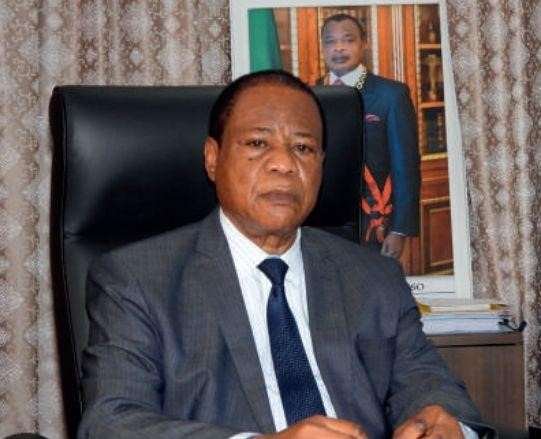
Interview with Guy Georges Mbaka, Minister of River Economy and Waterways, since September 24, 2022. This sector, facing financial and infrastructural problems, should clean itself up to support the country's economic development.
What are the main challenges to be addressed regarding river transport in Congo?
Water transport in Central Africa is generally the preferred mode of transport. Indeed, the Congo Basin has a large hydrographic network through which populations and a wide range of products pass.
Second only to the Amazon in terms of flow rate, the Congo River is a key element of the country's river transport network and, together with the Ubangi River, forms the trans-equatorial axis of the international river network. With its numerous tributaries, it represents a historical axis of transport and economic exchange for the entire sub-region, via the ports of Kinshasa in the Democratic Republic of Congo and Bangui in the Central African Republic, on the one hand, and Brazzaville, the secondary river ports of Ouesso, Mossaka, Impfondo, Ngombe, and the landing points of Liranga, Betou, Boyélé, and Makotimpoko in the Republic of Congo, on the other.
The river network in the Republic of Congo is very important: nearly 5,500 kilometers of navigable waterways, including 2,467 kilometers of interstate river network, composed of the Congo River and the Sangha and Ubangi Rivers. This network facilitates passenger and freight traffic between, on the one hand, Brazzaville and Bangui in the Central African Republic, Brazzaville and Kinshasa in the Democratic Republic of Congo, and, on the other hand, Brazzaville and the Republic of Cameroon, via the port of Ouesso.
To revitalize the river navigation system, there are many challenges to overcome. Indeed, reviving river transport in Congo is one of the main missions assigned to the Ministry of River Economy and Waterways, which I am responsible for leading.
To achieve this, a number of actions must be taken beforehand, including:
– to ensure the maintenance of waterways through dredging, marking and rock removal operations, in order to allow their navigability in all seasons; ;
– to rehabilitate existing port platforms and to construct and equip new ones; ;
– to acquire new floating units, in order to increase the supply of river transport; ;
– create a new river transport company in a public-private partnership;
– to build a modern shipyard.
These actions constitute constraints that call for the need to initiate partnerships with investors who have proven expertise.
It is with this in mind that promising contacts have been established with several partners who have expressed their willingness to support Congo in its efforts to revitalize the river economy and waterways sector, by investing in these projects deemed priorities.
These are, succinctly presented, the challenges that the Government, through the Ministry of River Economy, is called upon to address.
What is the status of the project between the Republic of Congo and the Central African Republic aimed at improving navigation on the Ubangi River?
In 2007, the Republic of Congo and the Central African Republic established a sub-regional integration body called the Economic Interest Group for the Common Maintenance of Waterways (GIE-SCEVN). This intergovernmental structure is responsible for navigational marking, dredging, unclogging, and hydrographic and geodetic surveys. Its objective is to ensure the safety of river navigation.
Unfortunately, the GIE-SCEVN is struggling to maintain its technical and operational capacity due to difficulties encountered in financing its activities.
In addition, it benefits from World Bank funding for capacity building, through the Regional Project for the Improvement of Road and River Transport Corridors in Central Africa (PRACAC).
Is the line connecting Brazzaville and Port Oyo operational?
This line will soon be operational. A concession agreement has been signed with an investor for the operation of the port of Oyo. The investor's program of activities includes the maintenance of the Alima River to ensure its navigability in all seasons.
There is talk of cooperation between China and the Congo regarding the development of the Congo River. What is the current status of these talks? And have you initiated other similar cooperation projects with other countries?
To date, there is no active cooperation with China regarding the development of the Congo River. However, a memorandum of understanding and a protocol were signed in this context with Chinese private partners in April and September 2019, respectively.
Given the numerous challenges, foreign partners willing to support the Congolese state in overcoming them are all welcome.