


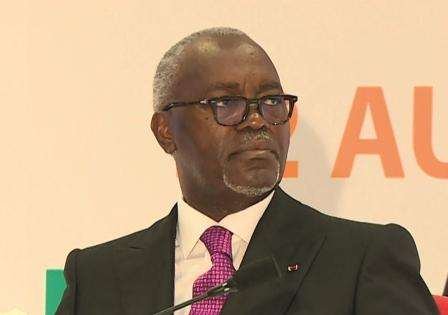
Interview with Hugues Ngouelondélé, Minister of Youth and Sports, of Civic Education, Skills Training and Employment since August 22, 2017. He was previously mayor of Brazzaville.
What are the main axes of the Skills Development for Employability Project (PDCE)?
The PDCE is a government project implemented with technical and financial support from the World Bank. It should be noted that the project was completed on June 30, 2023.
Its objective was to promote the acquisition and strengthening of employment and entrepreneurship skills for vulnerable young people living in urban areas, in order to enable them to integrate into the labor market. It comprised four main components:
The first component concerns vocational training, professional integration, support for entrepreneurship, and support for vulnerable youth, provided they are between 17 and 30 years old and have an educational level equivalent to or lower than the final year of secondary school without a high school diploma. Young people in this sub-component were referred to public and private training centers. Theoretical and practical training at the center is supplemented by a three-month advanced internship within a company or with a professional specializing in their field of study.
– Axis 2 targets vocational training for micro-entrepreneurs aged 18 to 39 with an income-generating activity (IGA) in the informal sector. Young people in this sub-component benefited from technical capacity building in their field of activity within companies or clusters, as well as business management training.
– Axis 3 targets functional literacy and learning courses for young out-of-school and unschooled adolescents, provided they are aged 16 to 24, and have a level of education lower than or equal to the 5th grade.
The young people in this sub-component benefited from apprenticeships with master craftsmen in workshops or specialized professionals. Cross-cutting training in life skills was also developed for the beneficiaries.
– Regarding axis 4, the Competitive Fund aimed to support and finance on a competitive basis the entrepreneurial initiatives presented by young people trained within the framework of the initial project.
At the end of the three training cohorts: 12,276 vulnerable young people benefited from the direct interventions – training and learning – of the project, including 6,153 women, or 48%.
One in four young Congolese graduates is unemployed. Isn't there a major problem with career guidance?
Regarding employment for young people with higher education degrees, the results of the 2022 Congo Transition to Working Life Survey (ETVA) showed that approximately one in four young graduates is unemployed, and only 161 of these graduates have completed their transition. Conversely, 481 have not yet begun their transition, and 361 are currently in the process of transitioning. Furthermore, 841 of these young graduates hold informal jobs.
This can be explained by many factors including: poor career guidance; the inadequacy of training programs in relation to the needs of the productive sector; the absence of a labor market information system; the limited supply of jobs; weak partnerships between the education system in general and the productive sector.
What does the Mosala project consist of?
The "Mosala" project has the general objective of contributing to the alignment of youth training programs with the skills needs of businesses and to contributing to the implementation and management of active employment policies, particularly aimed at reducing gender inequalities in professional integration.
In this capacity, it sets itself two main specific objectives, namely:
– improve the availability, relevance and quality of public and private training offerings in line with the prospects for integrating young people, and in particular women, into the labour market; ;
– to support young people, and particularly women, through strengthened intermediation services to better inform them, guide them in their choice of training and support them in their professional integration process.
It also aims to strengthen the public employment service system and to provide qualified personnel to key sectors of the National Development Plan (PND) 2022-2026. The "Mosala" project will start in the near future.
How do you plan to attract the pool of talent represented by the European diaspora?
The upcoming opening in Paris of a guidance and information agency of the Congolese Employment Agency will allow the Congolese diaspora in Europe to be aware of the job opportunities offered by companies, in the public and private sectors, established in our country.
The main mission of the Congolese Employment Agency being to ensure intermediation between job providers and job seekers, we hope that the opening of the Paris office will contribute to creating momentum towards a return.
To attract talent from the Congolese diaspora, a series of incentives will be necessary, such as the possibility of homeownership. This possibility exists.
The Government of the Republic will examine all the needs expressed in this regard by Congolese people in the diaspora, within the framework of the discussions we will have with those concerned.