


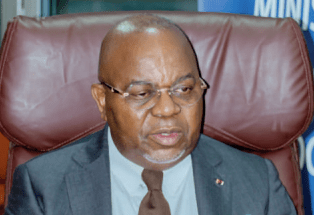
Interview with Bruno Jean Richard Itoua, Minister of Hydrocarbons since May 2021, who is in charge of the oil and gas sector in relation to the challenge of the energy transition. He held the rotating presidency of OPEC in 2022.
What are the stakes involved in the construction of the mega natural gas production and liquefaction center, which was launched on April 25th by President Denis Sassou Nguesso?
The project in question represents a significant economic advancement for the Republic of Congo, positioning it within a rapidly growing LNG sector. It is noteworthy that the price of liquefied natural gas has increased tenfold in just two years. This development of natural gas is intended to stimulate the country's economic growth by generating a new industrial complex that will be a source of revenue for the government. This initiative will also equip us to meet our domestic energy needs by converting gas into electricity. This electricity will be crucial for supporting sectors such as mining and forestry, and for expanding domestic gas distribution, while the gas could boost industries, particularly those planned for special economic zones, and especially fertilizer production.
Furthermore, this project will position the Republic of Congo among the relatively small group of LNG-exporting nations. Specifically, the timeline anticipates that production will begin in the third quarter of 2023, with projected LNG exports reaching over three million tons per annum (3 MTPA) by the end of 2025. Exports will be transported via two floating liquefied natural gas (FNG) units, or LNG carriers, with capacities of 0.6 MTPA and 2.4 MTPA, respectively. It is worth noting that the latter LNG carrier will become operational in 2025. Alongside these activities, offshore development strategies will be implemented, targeting oil fields such as Minsala and Nkala. These sites will see drilling operations for new wells as well as the establishment of infrastructure dedicated to gas processing, liquefaction, and storage.
Do you wish to attract international investors, particularly in offshore mining activities?
Our economy's dependence on oil and gas, which accounts for 701,300 of our revenue, underscores the vital importance of increasing investment in this sector. This is all the more crucial following the global economic slowdown caused by the COVID-19 crisis.
To date, we have successfully mobilized nearly ten billion US dollars for the Congolese oil industry. An increase in foreign direct investment is planned to stimulate the oil sector's industrial ecosystem. The expected immediate benefits include job creation, particularly through the resumption of activities within oil services and support companies, as well as throughout the entire oil production service chain. With this in mind, we are working to develop a highly attractive financial environment to maximize our oil production potential. This will allow investors wishing to establish themselves in the Congo to discover promising oil assets. In collaboration with the government, they will be able to implement projects offering attractive financial returns.
What is the purpose of the internal reform of the ministry under your responsibility?
The structure of a ministry reflects the vision we wish to establish, embodied in a strategy that considers the key levers for achieving the set objectives. Given the current energy context and the challenges associated with developing our mineral resources, it has become imperative to adopt more streamlined methods of analysis, control, and certification. Consequently, a thorough reform has proven necessary within the Ministry of Hydrocarbons. This reform aims to streamline the chain of command to meet the increasing demands of the State.
Furthermore, our mission includes the sustainable establishment of a center of expertise and knowledge to better control the supply chain. To achieve this, we felt it essential to redefine the organization of the Ministry of Hydrocarbons. Therefore, we have structured the ministry around four Directorates General and one Inspectorate, namely:
– General Directorate for Upstream Petroleum; ;
– Downstream Petroleum General Directorate; ;
– General Directorate of Gas; ;
– Directorate General for the Economy, Audit
and Trading; ;
– General Inspection.